Whenever I caught a cold as a kid, my mother used to soothe my symptoms with remedies that included natural ingredients like ginger, lemon, honey, and holy basil was one of them. The good thing was that these herbal remedies worked wonders for my health, but I no longer had a reason to skip school. Ah, those days!
Growing up, my mind was full of ideas, and I always wondered how to get things done. Holy basil calmed my mind and made it stress-free throughout the day.
Additionally, holy basil has great importance in Ayurveda. It is considered the sacred plant in Hinduism, and Indians worship this wonder plant because they believe it brings purity, prosperity, protection, and health.
Let’s explore this article and discover the incredible benefits of this wonder plant!
In This Article
Characteristics
Let’s dive into the characteristics of this aromatic plant.
Classification
- Scientific Name: Ocimum tenuiflorum
- Common Name: Holy Basil, Tulsi (Hindi)
- Alternative Name: Sacred Basil, Queen of Herbs, Hot Basil
- Kingdom: Plantae
- Family: Lamiaceae
- Order: Lamiales
- Class: Magnoliopsida
- Genus: Ocimum
- Specie: Tenuiflorum
Primary Characteristics
- Roots: The dense network of fibrous roots that extend horizontally are wiry (thin) in texture with tan to pale brown pigments
- Stems: The stems are quadrangular (four-edged) with green to purple hues. They are hairy and have a soft texture (young), while the mature ones are rigid and hardy at the base
- Seeds: These tiny (1-2 mm) egg-shaped seeds are dark brown with a smooth surface. They are produced in small, capsule-like structures by the flowers
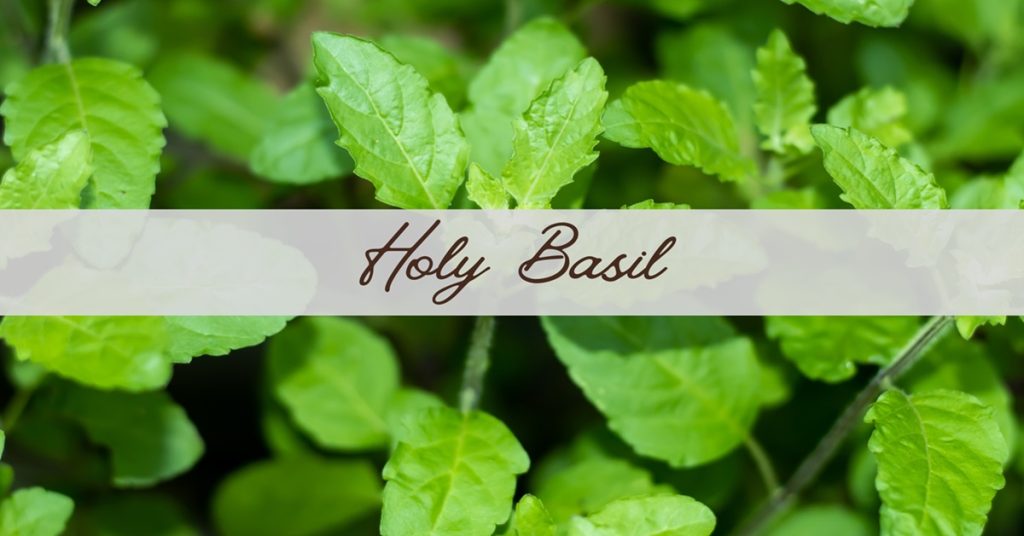
- Leaves: The leaves are oval (1-2 cm wide) and arranged oppositely with serrated ends and sharp tips. They have green to purplish tints with a hairy texture (notably underneath)
- Flowers: These tiny (6 mm in diameter), white-purple tube-like flowers are produced in raceme spikes (indefinite flowering), having a silky texture and sticky surface
Secondary Characteristics
- Plant Form: Perennial (shrub)
- Height: 1-2 ft
- Odor: Warm and aromatic (hint of mint)
- Taste: Blend of sweet and pepper-like
- Habitat: Southeast Asia (Indian subcontinent)
- Soil Type: Well-drained and fertile soil with slightly acidic to neutral pH
- Planting Time: Spring
- Bloom Time: Summer
- Germination Span: 7-14 days
- Part Used: Leaves
- Substitute: Basil
Health Benefits of Holy Basil
Do you know that holy basil is one of the most profound plants in natural medicine? Surprisingly, yes! It is known for its stress-regulating properties and offers multiple benefits to your health.
Let’s explore the incredible health benefits.
Stress and Anxiety
Holy basil is a notable adaptogen plant with stress-regulating properties that help your body combat stress and anxiety, making you calm and relaxed in tense situations.
It overcomes the high levels of cortisol (aka the stress hormone) in your body, relieves insomnia, and promotes better sleep.
Infections and Wounds
Holy basil has anti-inflammatory and antibacterial properties that defend against bodily infections and speed up the process of wound repair.
Tip: Apply a paste of fresh holy basil and neem leaves with rosewater to an open wound!
Blood Sugar
Do you love desserts but struggle with managing your blood sugar? If yes, add holy basil to your diet and enjoy your sweet-tooth cravings.
It can help with your stubborn blood sugar spikes, insulin resistance, and other diabetic-related symptoms.
Tip: Try holy basil leaves powder (dried) on an empty stomach with water.
Uric Acid
Did you know that uric acid is one of the culprits that form kidney stones?
However, taking herbal teas infused with holy basil can help you reduce high levels of uric acid in your blood.
This plant is a detoxifier and diuretic, which aids in flushing out the toxins and solid masses that form stones.
Inflammation and Pain
Rosmarinic acid, apigenin, and eugenol in holy basil are antioxidants, analgesic (pain-relieving), and anti-inflammatory that protects your body from inflammatory conditions (arthritis, conjunctivitis) and pain like migraine and kidney pain.
Its antioxidant properties defend your body from aging and degenerative diseases that accelerate the wear-and-tear mechanism.
Side Effects of Holy Basil
You are lucky if you haven’t experienced any of its side effects, but here I am to guide you!
If you take holy basil for health purposes, be aware of its side effects (primarily due to the compounds eugenol and ursolic acid):
- Upset stomach (nausea and diarrhea)
- Racing heartbeats
- You may be low on your glucose and energy.
- Skin irritation (if used topically, in the form of essential oil)
- Easy bleeding
- It affects your menstrual cycle
Who Should Not Take Holy Basil?
Individuals should avoid holy basil if they are:
- Allergic to herbs from the Lamiaceae family (basil, mint, thyme)
- Pregnant or trying to conceive, there may be a risk of miscarriage, preterm labor, and infertility
- Breastfeeding
- Taking medications such as blood thinners and anti-diabetic
How to Grow and Harvest Holy Basil

Another fact about the sacred value of holy basil (as I mentioned earlier) is that growing (including watering and caring) for it is a deed of worship in Hinduism.
Although I don’t stick to those beliefs, this plant indicates its importance to many people about how it works, and it’s your sign to grow your own with this growing guide!
Growing
- Holy basil grows in well-drained, fertile soil with acidic to neutral pH in a fully sunny area (approximately > 50 degrees)
- Make your soil rich in nutrients by adding a compost mix
- Plant the seeds ¼ inch deep directly into the soil surface, or start them indoors using a pot (I prefer terracotta pots) for eight weeks once the last frost has passed, and gently cover them with a fine-thin layer of soil
- Keep the soil moist (till the germination span – 7 to 14 days)
- If you prefer growing them indoors, transplant the seedlings (wait for two sets of true leaves) until the soil is temperature-friendly
- Space the plant about 11-15 inches apart, ensuring it has room for growth and adequate air circulation
- Water your plant constantly, but not soggy
- Prevent your plant from becoming leggy by pruning it
Harvesting
The best time to harvest your holy basil is the early mornings when the dew has dried. At this time, the plant has the highest levels of essential oil.
Use scissors or pinch off the leaves when your plant reaches a height of 12 inches with several true leaves.
Note: Never harvest more than one-third of the plant to ensure its continued growth.
Storing Holy Basil
Herbs that are easy to grow and require effortless storage attract me a lot, and holy basil is on the list. It is less challenging and demands less time in my active schedule.
On the contrary, herbs that need more care and time are somewhat challenging, but I enjoy their process and outcomes.
Here are a few techniques you need to know to store your holy basil.
Drying
Spread your harvested leaves in a tray. Keep the tray in a warm and well-ventilated area for a couple of weeks, or oven-dry the leaves at 37°C (98.6 °F) until they turn crispy.
Freezing
Wash the fresh leaves and pat them dry completely. Chop them finely, put them in a freezer-safe bag, and add a few drops of olive oil (optional).
Freeze the chopped leaves and use them within six months.
Holy Basil Tincture
Make your holy basil tincture using dried leaves (half a cup) and apple cider vinegar (as a base). Mix them in a jar and let it sit for four weeks.
After that, strain the liquid into a dark bottle and use it for two years.
Note: Start taking this tincture in small doses, then increase gradually!
Salve
Holy basil is incredibly beneficial for insect bites, rashes, and acne.
You can make this salve using essential oil from leaves and beeswax.
Tea Bags
I prefer to fill the empty tea bags with dried leaves of herbs and seal them with mild heat.
Note: Learn how to make homemade tea bags with these chamomile tea bags.
How To Consume Holy Basil
Holy basil is worthy of praise for its incredible health benefits, aroma, and taste in my cup and bowl of fresh salad.
Here are the easy ways you can consume this wonder plant in your daily life:
- Holy basil tea infused with fresh/dried leaves
- Fresh leaves for cooking (salad, stews, and stir-fry dishes)
- Herbal decoctions or infusions (for detoxifying your body)
- Herbal capsules or supplements (use dried leaves)
- Smoothies (try this if you are not a fan of herbal teas)
Tip: Holy basil blends well with mangoes, pineapples, and almonds!
Enjoy the benefits of Holy Basil by adding it to your diet!
The information presented in this article is for educational purposes only and should not be considered medical advice. Always consult with a qualified healthcare professional before making any changes to your health regimen.