During college, I craved to fill my herbal garden with every vibrant plant possible, and guess what? I now own a garden with many plants that are more than just beautiful; they also benefit my family with their medicinal properties. Among all my plants, echinacea is one of my favorites, bringing beauty and health benefits together.
Echinacea purpurea (purple coneflower) is more than a vibrant flower; it is the dream of every homesteader! Let me tell you why. It is not just easy to grow; it thrives well with minimal care and provides over-the-counter home remedies for your cold and flu. I often make echinacea tea with hands-on practice to boost my immune system naturally. It is a soothing remedy for those pesky colds.
If you are a seasoned gardener, a beginner, or an herbal lover, echinacea deserves a spot in your garden and kitchen.
Let’s discover this amazing plant and how it enhances our immune system!
In This Article
Species of Echinacea
These are the noteworthy species of echinacea with their common names:
- Echinacea angustifolia (narrow-leaved coneflower)
- Echinacea pallida (pale purple coneflower)
- Echinacea paradoxa (yellow coneflower)
- Echinacea tennesseensis (Tennessee coneflower)
- Echinacea simulata (wavyleaf purple coneflower)
- Echinacea laevigata (smooth coneflower)
Characteristics of Echinacea
Let’s get familiar with the characteristics of echinacea purpurea.
Classification
- Scientific Name: Echinacea purpurea
- Common Name: Purple coneflower, Eastern purple cornflower
- Alternative Name: Kansas Snakeroot, Hedgehog
- Kingdom: Plantae
- Class: Magnoliopsida
- Order: Asterales
- Family: Asteraceae
- Genus: Echinacea
- Specie: purpurea
Primary Characteristics
Roots
- This plant has a thin (wire-like) fibrous root system (most species have a taproot system) that extends into the soil to a length of about 5-10 inches
- Their outer surface is brownish, while the inner one is light brown with a rough and woody texture
- They ooze out a mucilaginous (gum-like) substance upon cutting them
Stems
- These hollow, unbranched, and hardy stems grow about 3-5 ft and stand erect to hold the weight of the flower
- They are green (turn purple when mature) with a rough-hairy texture, which feels slightly coarse upon touching
Seeds
- The small (2-3 mm) achenes are oval to slightly flattened seeds with dark brown to grayish-brown hues
- The seeds have a smooth yet striated texture
Leaves
- The deep green leaves are broad (1-3 inches) and lance-shaped, arranged alternatively on the stem
- They have a rough, hairy texture with serrated (zigzag) margins and prominent central veins
- The leaves near the base are larger (up to 5 inches) long, while the upper ones are small
- They produce a mild, herbal, and earthy odor when crushed
Flowers
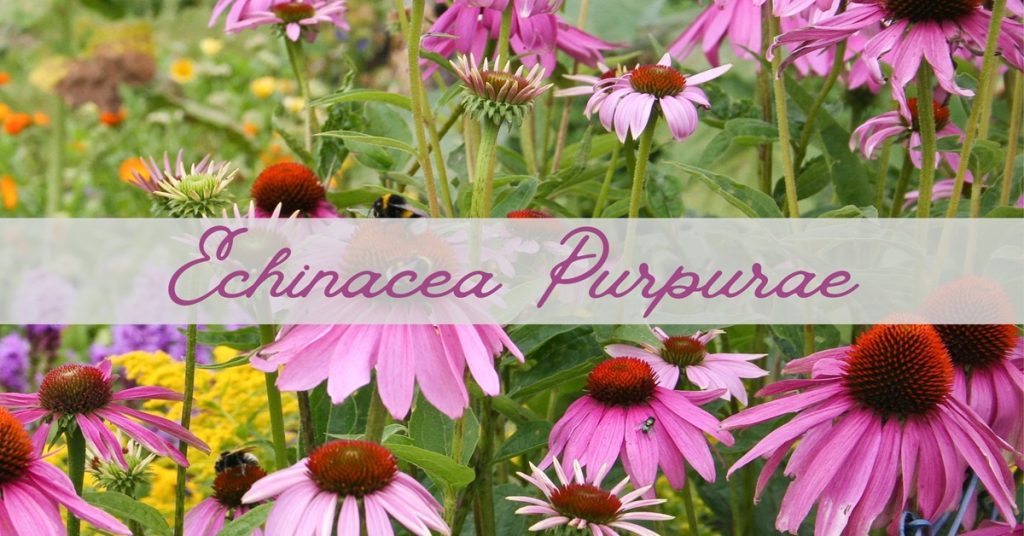
- The most cherished part of the echinacea plant is its sunflower-like flowers, which have rich purple/pink radiating petals and a brownish-orange cone-shaped central disc
- The central disc has a rough and prickly texture (like a hedgehog), while the petals are smooth
- The florets have a light, sweet, and distinctive fragrance that attracts the bees
- The flower heads are broad (2-5 inches)
Secondary Characteristics
- Plant Form: Perennial (herbaceous)
- Height: 3-5 ft
- Odor: Mild, sweet and earthy
- Taste: Bitter (hint of grass with a slight tingling sensation on tongue)
- Habitat: Eastern and Central North America (native region) and found in prairies, meadows, open woods, and roadside ditches
- Soil Type: Loamy and well-drained soil with neutral to acidic pH (slightly)
- Bloom Time: Late spring to early fall
- Seed Germination: 10-20 days
- Part Used: Roots, leaves, and flowers
Health Benefits of Echinacea
Like any other homesteader, I love the echinacea blooms in my herbal garden. They benefit my health, and what could be better? Isn’t that just wonderful?
Let’s explore its health benefits.
Enhances Immune System
Echinacea’s edible parts, mainly roots, leaves, and flowers, contain bioactive compounds (alkamides and chicoric acid) that enhance the immune system and fight infections.
Cold and Flu
Echinacea may reduce the duration of the common cold and flu.
It is known to ease upper respiratory tract symptoms such as cough, sore throat, and fever.
Tip: Drink echinacea tea when you’re suffering from cold and flu!
Antidote for Snake Bites, Spider Bites, and Insect Stings
As per the research, the roots have anti-venom properties that neutralize poisonous bites and stings.
Anxiety
The chemical compounds (rosmarinic acid and caffeic acid) in echinacea’s root extract may calm your anxiety spells.
I often use a few drops of echinacea and lavender oil before bedtime to enjoy sound sleep!
Heals Skin
Echinacea’s antioxidant and anti-inflammatory properties work wonders for your skin, from hydration to reducing wrinkles and mild acne.
It also heals wounds, skin burns, and minor forms of eczema.
Tip: Try echinacea salves to hydrate your skin and eliminate acne and burn scars!
Side Effects of Echinacea
This beautiful plant is safe to consume for a shorter period, yet it causes some side effects when consumed for a long time, such as:
Minor Gastric Issues
- Nausea
- Vomiting
- Stomach ache/cramps
- Constipation
- Heartburn
Allergic Reactions
- Hives
- Swelling of the face, lips, eyes and tongue
- Skin rash/redness
- Itching
Who Should Avoid Echinacea?
- Research shows that echinacea stimulates the immune system to enhance the defense mechanism against infections. Hence, people on immunosuppressive drugs (medicines that slow down the immune system) should avoid it
- If you are pregnant/trying to conceive, or breastfeeding, you need to consult your healthcare provider before consuming it
How to Grow Echinacea in Your Garden – A Simple Guide!
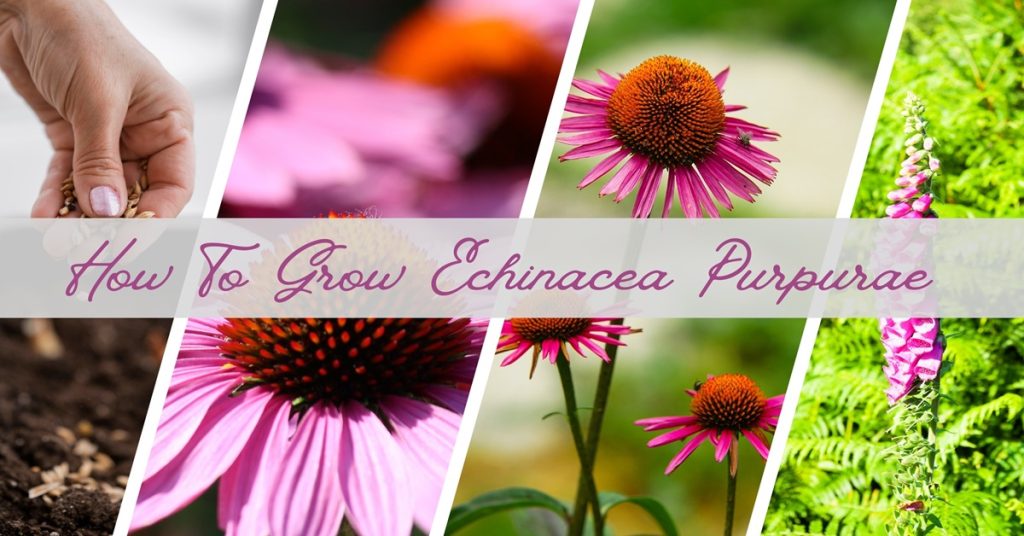
Here is a simple guide for growing beautiful echinacea in your garden:
- Choose a well-drained (loamy) and fertile soil with a neutral to acidic pH and partial-full sunlight
- Adding compost is always an ideal step to improve the soil fertility before planting your herbs
- Sow the seeds in the soil 1/4 inch (do not bury them, as they need light to germinate), and set the space about 11-18 inches apart
- Keep the soil damp throughout the growing season, especially during the dry spells
- The seedlings will develop with several leaves within 10-20 days
Things to Remember When Growing Echinacea
Here I am telling you a few things from my experience that you have to keep in mind when growing it:
- Once the plant has been established, you don’t need to overwater it as it is drought-tolerant
- Remove unnecessary weeds regularly for a healthy plant
- Use my DIY insecticide spray to prevent pests and diseases
- It would be best if you bore with its growing span as the plant takes up to 2-3 years to be fully mature (you will be happy to see it all grow in your garden and remember the days when it was just a seed)
- You can start growing them indoors by following the same steps (mentioned above) while placing the pot in a warm area (away from direct sunlight)
- Be careful when transplanting those thin seedlings from the pot into the ground
Harvesting and Storing Echinacea – Easy Techniques!
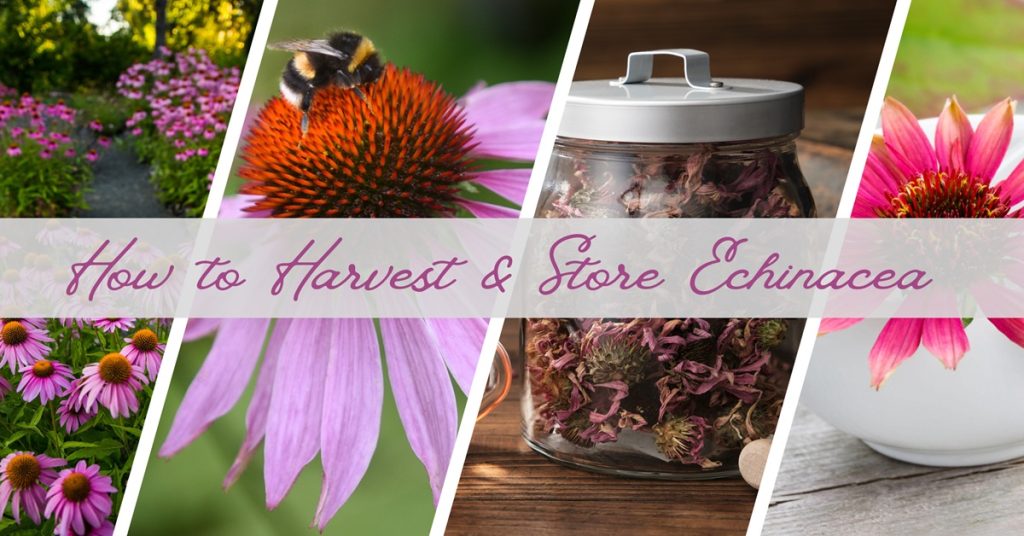
Harvesting
I love how herbs seem ready to harvest from my garden just as I need them, and fall is a season to harvest the echinacea!
Roots
- Gently dig around the plant’s base (rootball) using a digging tool (I prefer a garden fork) to lift the roots from the soil
- Trim off the tiny roots from the root ball and wash the excess soil
- Cut the harvested roots into smaller divisions and store them using a drying technique
Note: You can implant the remaining roots into the ground for replantation!
Leaves and Flowers
Cut the leaves from the stems and flower heads using pruning shears and store them for future use.
Storing
Isn’t it beautiful? You are doing something exactly as your parents taught you with all their love and heart!
Till now, I have effortlessly stored many herbs and spices, especially those I have grown myself because my parents taught me these storage methods.
Without further ado, let me share with you some easy methods to store your echinacea.
How to Store the Roots
- You have to spread a few roots in a single layer on a drying rack in a warm, dry area with adequate air circulation
- Turn the root layer occasionally and let it sit for at least 7-10 days
- Check the roots for complete dryness (they should break easily)
- Keep the dried roots in airtight containers in your kitchen pantry
How to Store the Leaves and Flowers
Tie small sets of leaves and flowers together (I use rubber bands), hang them upside-down in a warm, dry area, and let them sit for at least two weeks.
Keep your dried leaves and flowers in airtight containers and enjoy them for future use.
Tip: The dried leaves should crumble easily!
Echinacea Salve
I trust herbal salves for my skin (I have a sensitive one). They soothe minor cuts, bruises, and burns.
That’s how I made salve using echinacea dried flowers:
- Make an infused oil simply by adding olive oil to a jar filled with dried echinacea flowers and let it sit for two weeks (don’t forget to strain the oil using a strainer)
- Mix the infused oil with beeswax in a ratio of 4:1 through a double-boiling technique until melted completely
- Pour the mixture into a small jar and let it cool until solid
- Store the echinacea salve in a cool, dark place
How to Consume Echinacea – Interesting Ways
Something I love about echinacea is that it is simply gorgeous and edible!
You can find many possible ways on the internet, but here I am sharing some interesting yet tried ways to consume this beautiful herb.
Tea
Echinacea tea brings a sense of warmth, and I make it for my family when they are under the weather. It relieves colds and supports their immune systems.
Tincture
Tinctures are my second go-to liquid extract after herbal teas.
Homemade Echinacea Tincture
Ready-made tinctures can be quite expensive and may contain ingredients that are not natural. Here’s an easy start to making your own and saving money!
- Fill a medium-sized glass jar with echinacea roots (I prefer fresh), then add 500 mL of spirits (like vodka) or apple cider vinegar
- Close the jar and shake it properly
- Place the jar in a cool, dark area for 5-6 weeks
- Strain the solution and store it in a dark glass bottle
Tip: Add 10-20 drops of this tincture in water to soothe your throat and cold!
Powder
I use the rich purple flowers to make echinacea powder.
I personally love the purple-pink pigment from these flowers, which gives my cakes, smoothies, and sometimes purple pasta the perfect natural vibrancy.
Make Echinacea your next go-to herb for wellbeing!
The information presented in this article is for educational purposes only and should not be considered medical advice. Always consult with a qualified healthcare professional before making any changes to your health regimen.