What is one thing that makes you eagerly wait for a cozy winter? For me, the fresh and flavorsome seasonal vegetables. One of my favorites? Fenugreek leaves (aka methi leaves).
This powerful herb is not just another spice blend from your kitchen pantry. It contains iron, minerals, and vitamins and has a low glycemic index. Imagine adding all that power to your daily meals!
From curries to soothing herbal teas, this mighty plant brings a maple-like flavor with incredible benefits to your wellness.
Let’s explore this versatile plant.
In This Article
Characteristics
Here are the characteristics you should know.
Classification
- Scientific Name: Trigonella foenum-graecum
- Common Name: Fenugreek
- Alternative Name: Greek hay, Methi (Hindi/Urdu)
- Family: Fabaceae (Pea family)
- Kingdom: Plantae
- Class: Magnoliopsida
- Order: Fabales
- Genus: Trigonella
- Specie: foenum-graecum
Primary Characteristics
Roots
- The shallow roots combined with a taproot system allow the plant to be drought-resistant
- It has a fibrous texture and is light brown to tan in color
Stems
- The hollow stems are herbaceous (green) and grow up to 11-25 inches
- These loosely branched stems have a slightly hairy texture
Seeds
- The fenugreek seeds are the main ingredient of this plant
- They are small (3-5 mm), robust, and have an angular shape
- These light brown to golden yellow seeds are enclosed in a pod-like structure (each pod contains 15-20 seeds)
- They have a nutty odor and mustard-like taste
Leaves
- The rich green leaves are oval with soft margins and hairy texture
- They are alternatively arranged in three tiny leaflets (trifoliate) and are 3-5 inches long
- They have a characteristic odor (maple syrup), while the dried leaves taste like celery
Flowers
- The clover-like flowers are small (1-1.5 cm) in diameter and grow in clusters
- These vibrant flowers are papilionaceous (resemble a butterfly) with a range of colors (pale yellow, white, purple, and blue)
- They bloom in the leaf axil of the stem, which then turns into seed pods that contain seeds
Secondary Characteristics
- Plant Form: Annual herb
- Height: 20-35 in (50-90 cm)
- Odor: Characteristically strong, nutty with a hint of maple syrup
- Taste: Sweet and slightly bitter (like a caramelized sugar)
- Habitat: Southern Europe and Western Asia
- Soil Type: Well-drained (loamy soil) and neutral/acidic pH
- Bloom Time: Late spring to early summer
- Germination Span: 5-10 days
- Part Used: Seeds (as a spice) and Leaves (as an herb)
- Substitute: Mustard seeds and celery leaves
Uses of Fenugreek
Did you know you can use this herb for more than a condiment?
Let’s find out:
- Flavoring agent (in the making of maple syrup)
- Herbal salves (both skin and hair)
- Fenugreek seed powder as soil fertilizer (treats nitrogen fixation)
- Fenugreek leaves as a vegetable.
- Animal feed (to improve milk production)
Health Benefits of Fenugreek
Did you know adding fenugreek to your meals can be a game-changer for your health? Let’s find out how this powerful herb can benefit our health.
Nutritional Value
Did you know that one tablespoon (11-12 grams) of this herb’s seeds contains the nutritional value of a superfood? We are truly fortunate to have them in our kitchens!
Let’s explore it:
- Calories: 34-35 grams
- Fiber: 2-3 grams
- Protein: 3-4 grams
- Carbs: 4-6 grams
- Fats: 1 gram
- Iron: 20%
Weight Loss
The fiber in fenugreek promotes satiety (a feeling of fullness), which reduces overeating and ultimately helps with weight loss. However, it also fulfills your nutritional requirements.
Moreover, drinking its seeds water may reduce stubborn fat around your belly.
Stimulate Testosterone in Men
Are you experiencing low sex drive, reduced sperm count, or your performance letting you down? Relax and give yourself a fenugreek!
Numerous researches show that this spice blend can benefit men with decreased testosterone levels, helping them to improve their sexual health smoothly.
Diabetes
Did you know this healthy herb has a low glycemic index? Yes! The seeds are loaded with soluble fibers which promote insulin secretion and reduce blood sugar spikes.
Tip: Consume 2 tablespoons of the seed powder on an empty stomach to manage your diabetes!
Women Health
This powerful herb can elevate women’s overall health, from period cramps, and hot flushes, to low breast milk production.
When I was breastfeeding my son, my milk supply wasn’t the best, so I used to have fenugreek seed power every day. It worked like a charm and I could breastfeed him until he was two years old!
Let’s see how it can be beneficial for women:
- Ease menstrual flow
- Reduce period cramps
- Stimulate breast milk production
- Relieve PMS symptoms (mood swings, acne, breast tenderness, cravings)
- Help to reduce the symptoms of PCOS (weight management)
- Tackle menopausal symptoms (hot flushes)
Hair Health
Fenugreek seed oil’s proteins and nicotinic acid stimulate blood circulation, which helps reduce dandruff, hair loss, and breakage and promotes hair growth.
It also helps for balding, uneven mustache, scraggly beard, and hair thinning.
Fenugreek for Skin
The seeds contain a gel-like substance that hydrates the skin by locking in moisture, giving smooth, dry-patch-free skin.
Tip: Make a fenugreek face mask by adding 2 tablespoons of powdered seeds and aloe vera gel to hydrate your skin instantly!
Anti-inflammatory
The flavonoids and saponins in this powerful plant have anti-inflammatory properties that are beneficial in treating inflammatory disorders, such as arthritis, acne, gastric ulcers, gout (due to increased uric acid), minor wounds, and cuts.
The mucilage in seeds masks the inflamed area and promotes healing.
Side Effects of Fenugreek
Consuming fenugreek (in food amounts) is relatively SAFE for most individuals.
Although some people may have experienced these unwanted side effects (when consumed in large quantities):
- Diarrhea
- Bloating
- Indigestion
- Miscarriage
- Headache
- Body/Urine odor may become pungent (maple-like)
Who Should Avoid Fenugreek?
You should avoid consuming it if you are:
- Allergic to the pea family (soya bean, beans, and peanut)
- Pregnant. Although fenugreek stimulates breast milk, it may cause miscarriages and preterm delivery due to the presence of phytoestrogens
- Taking diabetes medicine, it may interact with the medicine and lead to severe hypoglycemia (low blood sugar)
Note: It is always a good idea to consult your healthcare provider before starting fenugreek as a medicine or supplement to ensure a safe dose!
How to Grow and Harvest Fenugreek
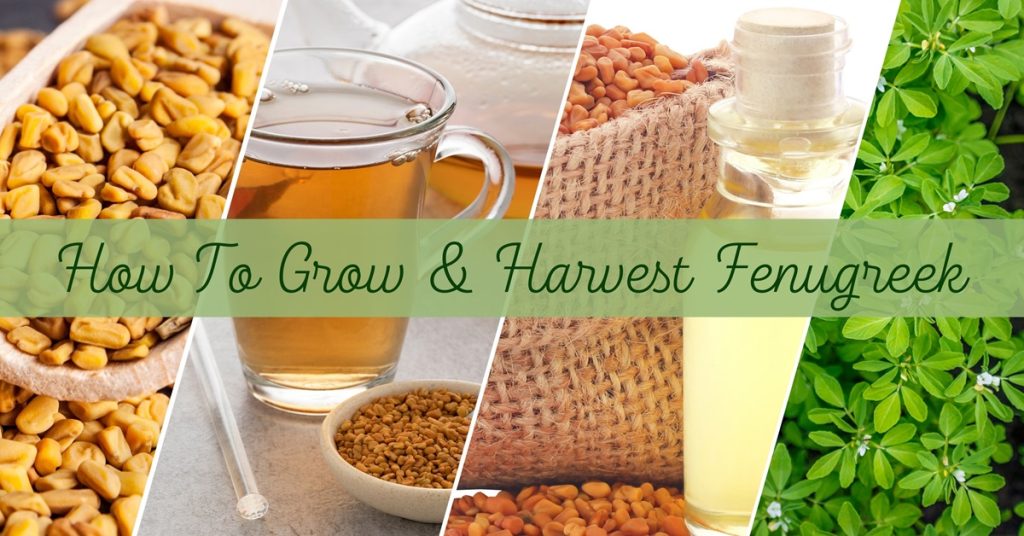
This mighty plant grows fast (less than 40 days) and will not give you a tough time while growing and harvesting. Cheers to your green thumb!
Let’s learn how to grow and harvest it.
Growing
- Fenugreek grows best in a well-drained, fertile soil with acidic to neutral pH with 4-6 hours of sunlight (daily)
- Add 1/3 compost to your soil
- Sprinkle the soaked seeds (overnight) about 1/4 inch in the soil
- Water the soil gently until germination (takes 5-10 days)
Note:
- Soaking seeds in water overnight will enhance the germination and seed quality
- You can grow your fenugreek in pots, containers, and grow bags
- The shallow roots of this plant are okay with wide containers of 4-6 inches deep with a good drainage hole
- After planting the soaked seeds in a pot, try to place your planting pots near your balconies or patio (to catch sunlight)
Harvesting
Harvesting fenugreek is easy when you know which part you want to collect!
Seeds
- To harvest seeds, you must wait 4-5 months (after planting) for the pods to turn yellow and dry
- Once the pods are yellow and dry out, cut the entire stem (above the soil level) using pruning shears
- Peel the dried pods to reveal tiny seeds inside
Leaves
- To harvest leaves, you must wait 30-40 days (after planting) when the plant achieves a height of 5-6 inches (tall)
- Use sharp scissors to snip the outer leaves (at the plant’s base)
- Try to leave the central part of the stem and a few smaller inner leaves to allow room for growth
Tip: Harvest rich, green, healthy leaves for storage!
Storing Fenugreek
From my personal experience, storing this herb is simple! Let’s explore.
Drying
- After harvesting the green, healthy leaves, chop them and spread them in a tray
- Keep the tray in a warm and dry area (away from the direct sunlight)
- Let it sit for 1 week to dry completely
- Once dry, grind them to make a powder or store the dried leaves in airtight jars
Freezing
I wash the freshly harvested leaves with cold water, pat them dry, and chop them.
Keep the chopped leaves in a freezer-safe bag and freeze them for 6 months.
Infused Oil
For me, fenugreek-infused oil is versatile. My dishes and hair both need it!
- I add 2 tablespoons of fenugreek seeds in 100 ml of olive oil for cooking
- For my hair mask, I soak seeds and grind them with aloe vera gel and a few chamomile flowers (for heavenly fragrance)
Tincture
Fenugreek tincture is one of my go-to herbal tinctures for weight loss.
How to Consume Fenugreek
Is fenugreek the least consumed herb in your kitchen cabinets? Try to pay attention to this powerful herb!
For a healthy evening snack, I love sprinkling a pinch of fenugreek powder and cinnamon on my yogurt bowl. It’s heaven!
There are many ways you can incorporate powerful herb into your diet:
- Fenugreek seed water, infusion, and decoction
- Fenugreek seed powder with honey for better metabolism
- Dried leaves to add earthy flavors to your dishes
- Roasted fenugreek seeds are a great spice blend for curries, stews, and salads
Transform Your Health Today With Fenugreek!
The information presented in this article is for educational purposes only and should not be considered medical advice. Always consult with a qualified healthcare professional before making any changes to your health regimen.